Content Engine
PersonalI’m building a tool to help with the content I make as an artist, using my existing work as a starting point for drafts that sound more like me.
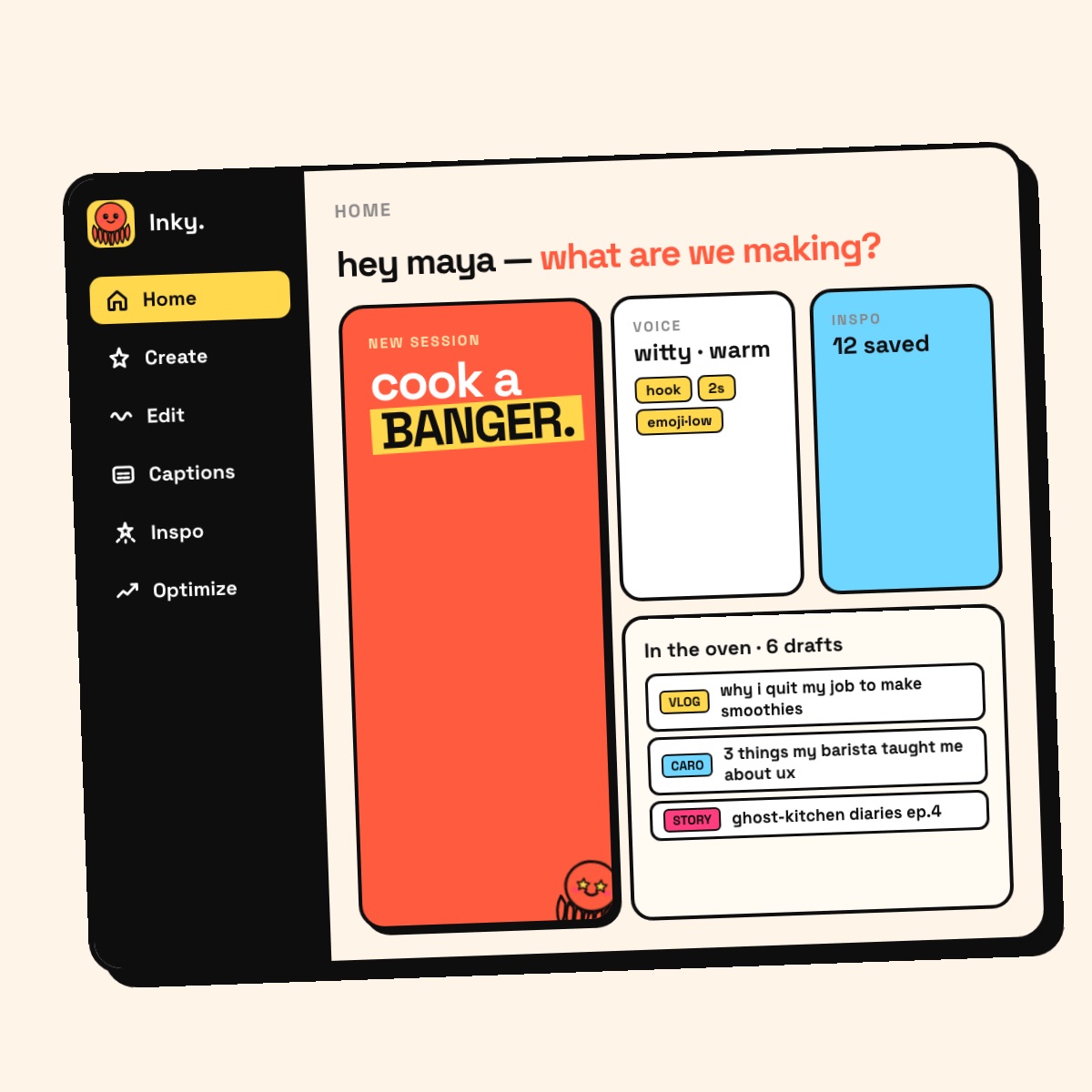
I wanted help turning ideas into content, but the drafts I got from AI often felt interchangeable. Describing my voice in a prompt wasn’t getting at the choices I actually made in my writing.
I built a voice profile from existing work and made it available across drafting, editing, captions and references, so I could develop an idea without explaining myself again each time.
The app now supports eight content formats, along with editing, captions, a reference library and an Instagram feed audit. I’m continuing to use it on my own work and refine the parts that don’t feel right.
Why I started building it
As an artist, I spend a lot of time thinking about how to talk about the work after I’ve made it. A song might begin with a melody or a feeling that takes weeks to understand, and then I have to find a way to explain it in a caption or a short video. I wanted a tool I could riff with while working through that process.
The examples felt more useful than a list of adjectives about my tone. My existing work could show the kinds of stories I told, the words I returned to and the things I would never say. I made that body of work the basis of a profile that informs each part of the app.
That profile includes vocabulary, recurring topics, visual preferences and patterns to avoid. The last part matters as much as the rest: sometimes the easiest way to recognize your voice is to read a line and think, I would never write that. I keep updating those patterns as I use the product.
How I’m using it
I built the product, interface and engineering myself. It brings together scripts and shot lists across eight formats, draft editing, platform-specific captions and a library of references. The Instagram audit helps me look at what I’ve already posted before deciding what to make next.
I also built the account system and AI integration, with limits on usage and the amount of material analyzed at once. Those decisions keep the app practical to run while I’m still learning what makes it useful.
There’s an animated octopus called Inky in the interface, which was a fun excuse to give the app some personality. Most of my attention, though, goes to whether it helps me get from a half-formed thought to something I actually want to share.